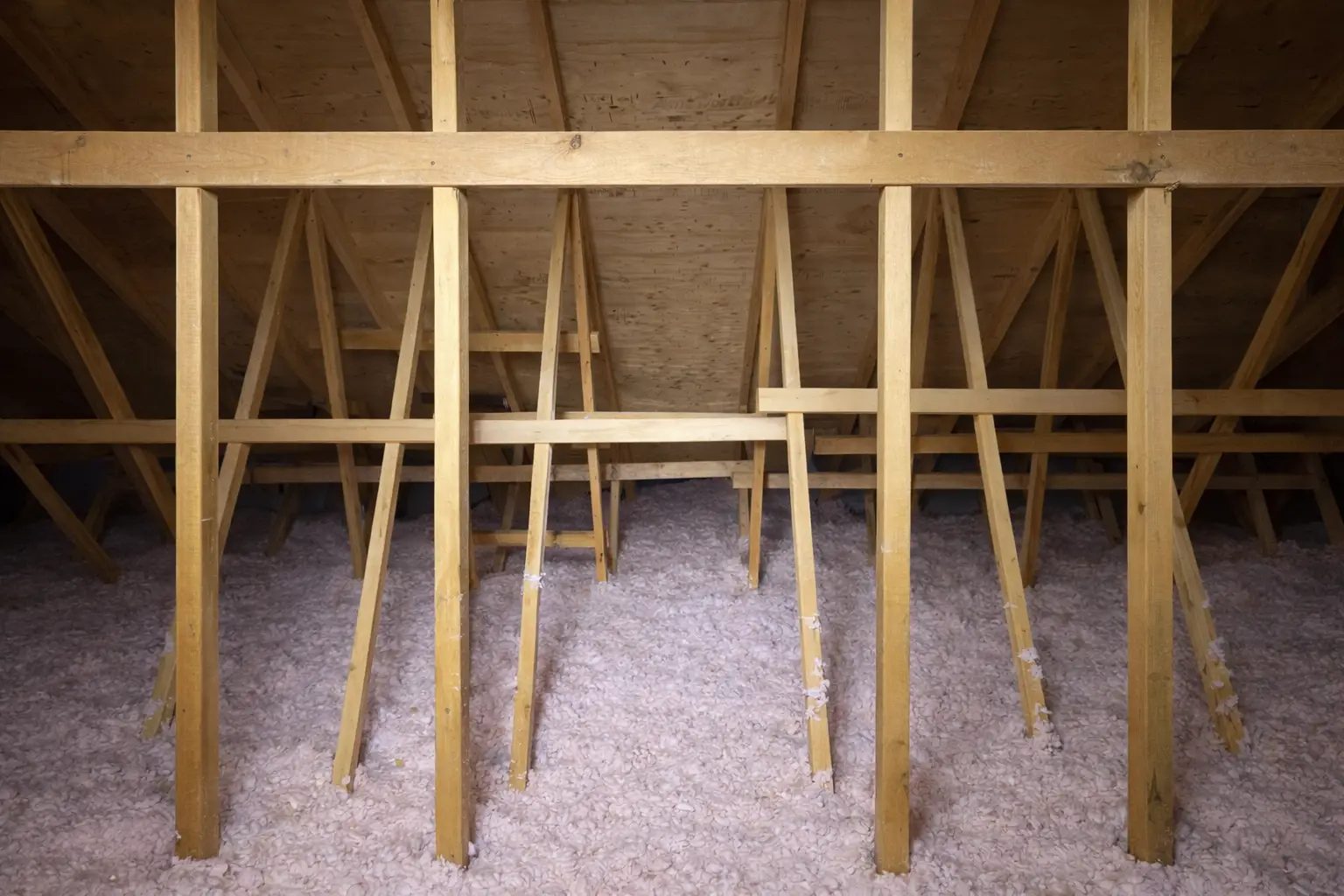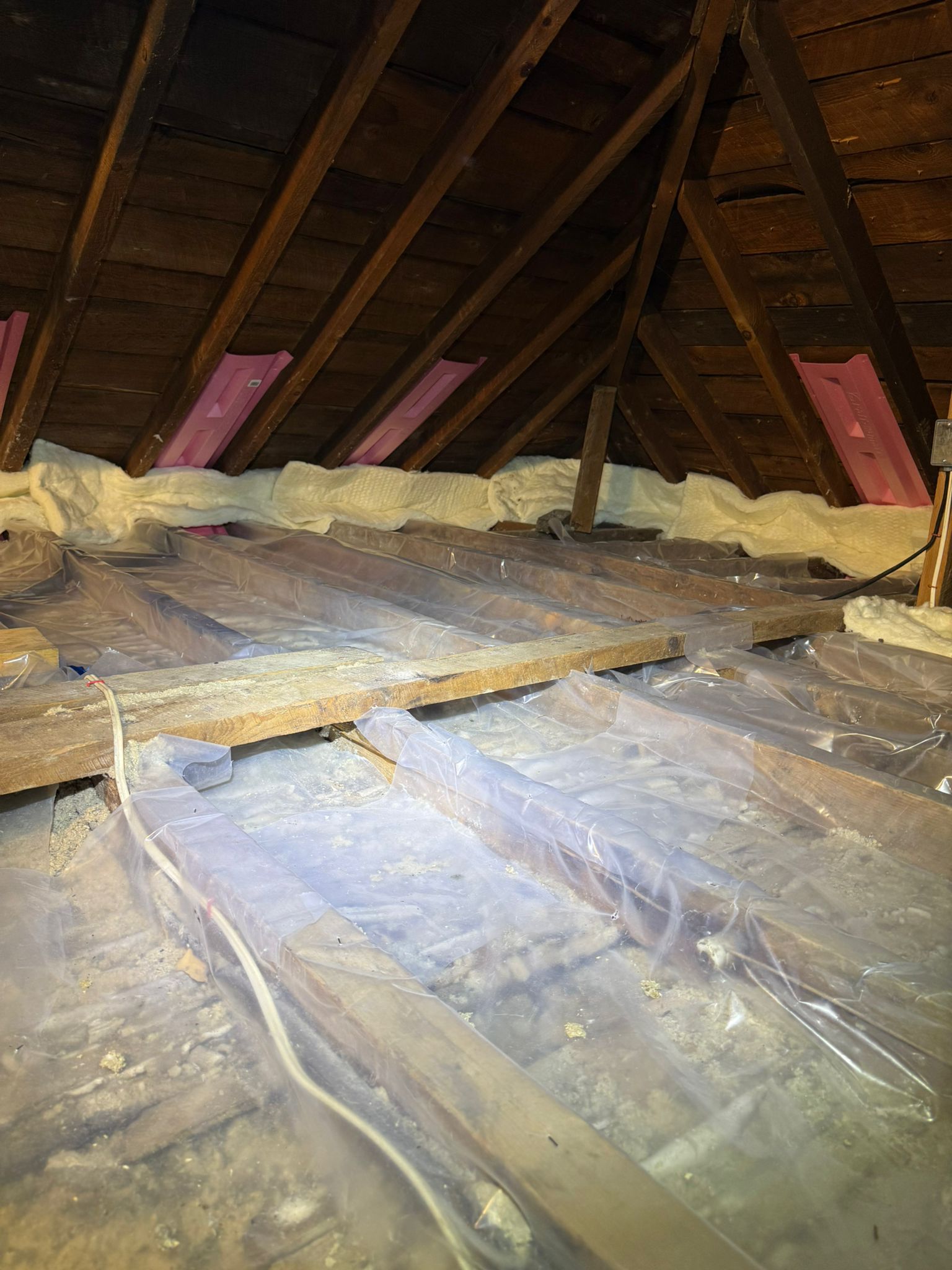
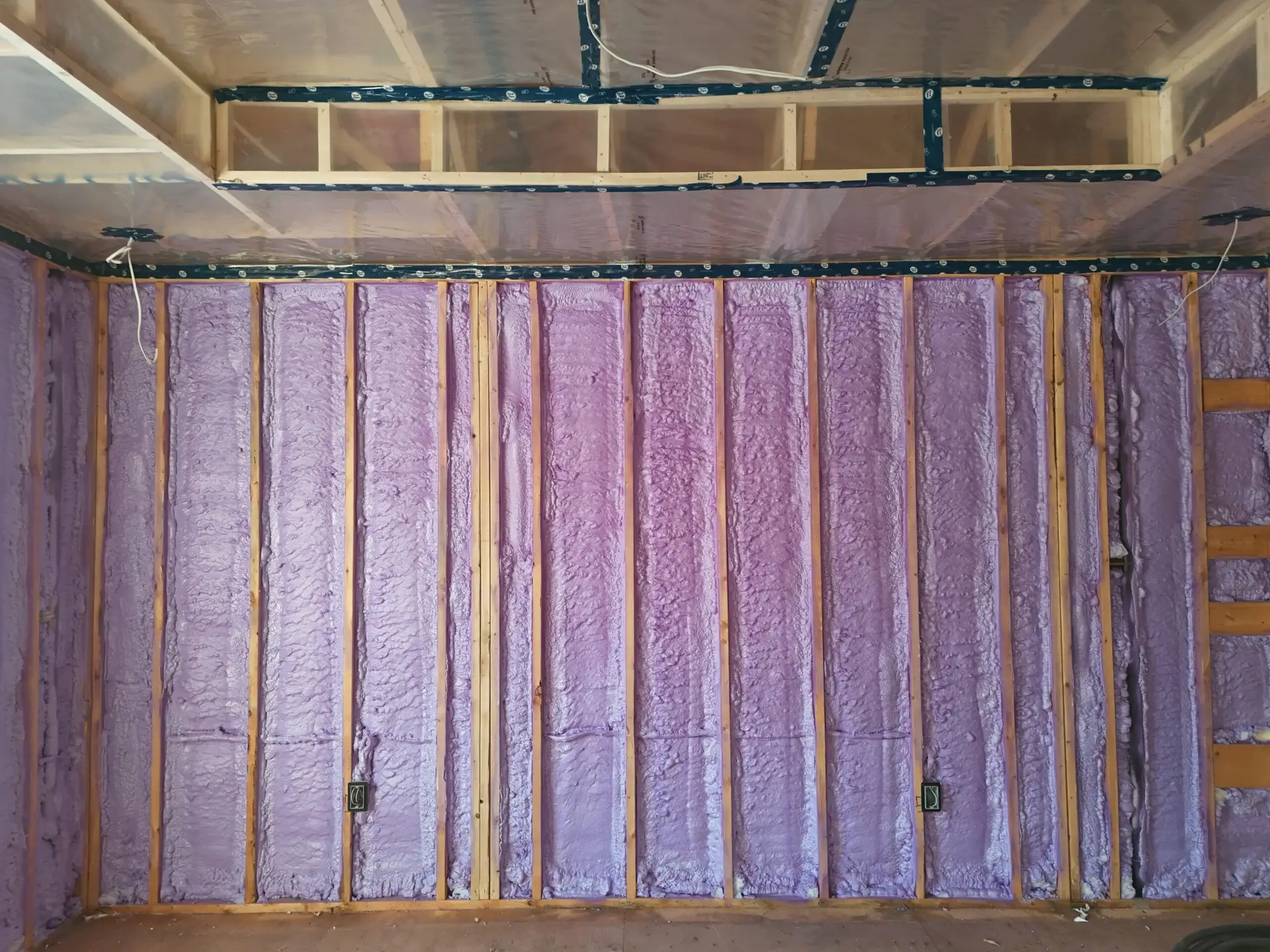
Orillia sits at the gateway to cottage country, between two lakes, and it shows in the buildings. Beyond the main house, a lot of Orillia-area properties have other structures: a bunkie for guests, a boathouse with a loft, a detached garage with space above, a backyard studio or she-shed, a guest cabin.
Almost all of them share one thing: they were built for warm-weather use, and they’re miserable (or unusable) the rest of the year. If you want to actually use that bunkie in spring and fall, run the garage studio as a year-round office, or make the boathouse loft a real guest space, the missing ingredient is almost always insulation — and spray foam is usually the right tool for these small, awkward, often oddly-built structures.
Here’s where it fits.
Why these structures are so hard to heat
A bunkie, boathouse, or backyard studio is typically built like a cottage, not a house:
- Little or no insulation — it wasn’t meant for winter
- Thin walls and shallow roofs — not much cavity depth to work with
- Often on piers, posts, or a slab — cold coming up through the floor
- Single-pane windows and gaps everywhere — no air sealing
- Sometimes unusual construction — half-timber, board walls, retrofitted over the years
Put a space heater in one of these and you’ll heat the outdoors. To make it genuinely usable in more seasons, you have to bring the shell up to standard — and spray foam does the most in the shallow, irregular assemblies these little buildings have.
The two products, briefly
| ½ lb open-cell | 2 lb closed-cell | |
|---|---|---|
| Approx. R per inch | ~R-3.5 – R-3.8 | ~R-6.0 – R-7.0 |
| Own vapour barrier? | No | Yes, at sufficient thickness |
| Moisture | Absorbs | Resists |
| Best here for | Interior partitions, sound | Shallow walls/roofs, floors over open space, near-water structures |
For most cottage-country structures, closed-cell is the workhorse — its high R-per-inch matters in shallow walls and roofs, and its moisture resistance matters near the water and in buildings that sit unheated for stretches.
½ lb open-cell → · 2 lb closed-cell →
By structure type
The bunkie or guest cabin
The classic cottage-country outbuilding. Usually a single room, thin walls, a shallow roof, and no insulation. To use it in spring and fall (or year-round for guests):
- Closed-cell in the walls and roof — maximum R-value in minimal thickness, sealing the air leaks at the same time
- The floor — if it’s on piers with open air underneath, foam sealed into the floor structure from below stops the cold coming up
- A heat source and ventilation planned to match
The result is a little building that’s actually comfortable outside July and August.
The boathouse loft
A boathouse over the water, with living or sleeping space above, is one of the hardest structures to make comfortable — cold water below, exposure on all sides, and moisture everywhere. Closed-cell foam’s moisture resistance is essential here, on the walls, roof, and especially the floor over the water. This is a structure to assess carefully, not to guess at.
The garage studio, loft, or workshop
A detached garage with a studio, office, or loft above (or a heated workspace below) is increasingly a year-round space — a home office, a hobby studio, a gym. Closed-cell in the walls and roof, and in the ceiling if there’s heated space above an unheated bay. If the garage is attached to a dwelling, fire-rated drywall is required over the foam. Garage ceiling insulation → · Fire-rated drywall →
The backyard studio / she-shed / office
The pandemic-era backyard office is now a permanent fixture, and most were built (or converted) without winter in mind. Foam in the walls and roof, attention to the floor, and a ventilation plan turn a three-season shed into a year-round room.
The safety and moisture rules for small structures
Two things matter more in these buildings than people expect:
Combustion and ventilation. If you’re heating a small, now-sealed structure with any combustion appliance (a propane heater, a wood stove in a cabin), it needs proper combustion air, safe venting, and a carbon monoxide detector. Sealing a small space tight around a combustion source without planning ventilation is genuinely dangerous. This is an assessment-first job.
Moisture — especially near water. A boathouse, or any structure near the lake, deals with constant moisture. And a building that sits unheated for stretches goes through humidity swings. The moisture strategy has to be right, or you seal problems in. Fix any water/drainage issue first, always.
These small structures are deceptively tricky — shallow assemblies, odd construction, near water, often with a combustion heater. Worth having assessed properly rather than DIY-foaming.
Where foam isn’t the answer
The main house attic — blown-in reaches full depth for less. Attic insulation →
Interior partitions where you only want quiet — mineral wool for sound.
Over an unresolved moisture problem — fix water first, especially near the lake.
A structure you truly only use in summer — if you’ll never heat it, insulating the walls does little (though it can still reduce summer heat and moisture).
Practical questions
Can you make my bunkie usable in spring and fall? Usually yes — insulating the walls, roof, and floor with closed-cell foam, plus a heat source and ventilation plan, is what extends the season or makes it year-round.
Do I need to leave during installation? On an unoccupied outbuilding this is rarely an issue. We install Insulthane Extreme by Elastochem; we’ll discuss ventilation and re-entry, and flag any respiratory sensitivities.
Is a boathouse loft realistic to heat? It can be, but it’s the hardest case — cold water, exposure, moisture. It needs careful assessment and closed-cell foam. We’ll be honest about what’s achievable.
Can you insulate and drywall the studio too? Yes — foam plus drywall (including fire-rated where required) on one job.
Does an outbuilding qualify for the insulation rebate? The Home Renovation Savings program is oriented to the home’s main conditioned living space. A detached bunkie, boathouse, or standalone studio is often outside it. Worth checking the specific case. Orillia rebate details →
⚠️ Program terms change — confirm at homerenovationsavings.ca.
Get that other building assessed
Whatever the structure — bunkie, boathouse, garage studio, backyard office — making it usable in more of the year comes down to insulating the shell properly, handling moisture, and planning heat and ventilation safely. We’ll assess it and tell you honestly what’s achievable and what it takes.
Pro Insulation Contracting has insulated Ontario homes and structures for over 10 years and serves Orillia, Lake Country, and the surrounding area.
📞 (416) 315-0471 · Book a free assessment →